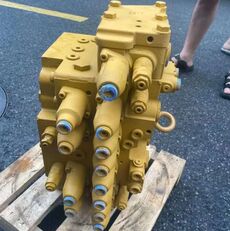
259-7400 2597400 ventilpaket till Caterpillar 330DL midigrävare


Om du väljer att köpa utrustning till ett lågt pris, se till att du kommunicerar med den riktiga säljaren. Ta reda på så mycket information om ägaren av utrustningen som möjligt. Ett sätt att fuska är att representera dig själv som ett riktigt företag. Vid misstanke, informera oss om detta för ytterligare kontroll, via feedbackformuläret.
Innan du bestämmer dig för att göra ett köp, granska noga flera försäljningserbjudanden för att förstå den genomsnittliga kostnaden för din utvalda utrustning. Om priset på erbjudandet du tycker är mycket lägre än liknande erbjudanden, tänk på det. En betydande prisskillnad kan indikera dolda fel eller försök från säljaren att begå bedrägliga handlingar.
Köp inte produkter där priset är för annorlunda än genomsnittspriset för liknande utrustning.
Ge inte samtycke till tvivelaktiga löften och förbetalda varor. Om du är osäker, var inte rädd för att klargöra detaljer, be om ytterligare fotografier och dokument för utrustning, kontrollera dokumentens äkthet, ställ frågor.
Den vanligaste typen av bedrägeri. Oärliga säljare kan begära en viss förskottsbetalning för att "boka" din rätt att köpa utrustning. Således kan bedragare erhålla ett stort belopp och försvinna, utan att ni kan få kontakt längre.
- Överföring av förskottsbetalning till kortet
- Gör ingen förskottsbetalning utan pappersarbete som bekräftar processen att överföra pengar, om säljaren är osäker i meddelandet.
- Överföring till "Trustee"-kontot
- En sådan förfrågan borde vara alarmerande, du kommer sannolikt att kommunicera med en bedragare.
- Överföring till ett företagskonto med ett liknande namn
- Var försiktig, bedragare kan dölja sig som kända företag, och gör små ändringar av namnet. Överför inte pengar om företagets namn är i tvivel.
- Byte av egna uppgifter i fakturan till ett verkligt företag
- Innan du gör en överföring, se till att de angivna uppgifterna är korrekta och om de avser det angivna företaget.
Säljarens kontaktuppgifter

 +86 189 289...
+86 189 2896 5241


 Kina


 Kina


 Rumänien, Maramures
Product Overview
A 330DL running a hydraulic breaker lives a different hydraulic life from one that only digs. The breaker circuit is fed through the auxiliary section of the main valve, and every hammer blow sends pressure spikes back through that section — thousands of them per shift. Add ripping work, or a machine that spends part of each week on shear or grapple duty, and the block accumulates wear in places a digging‑only machine never stresses.
That shows up in ways owners do not always connect to the valve. The breaker loses impact force gradually. The boom feels soft when carrying a loaded bucket after attachment work. Swing placement drifts. The auxiliary circuit starts behaving inconsistently, sometimes stalling, sometimes creeping. The cause is typically leakage past worn spools, made worse by spiked pressure in the auxiliary section. This OEM‑grade assembly replaces the block complete with fresh internals set to CAT values, so the worn unit comes off and the replacement fits the original port positions.
Core Advantages
1. Attachment duty stops eating the auxiliary section
Hammer and ripper work sends pressure spikes through one section repeatedly. Fresh spools and seals restore that section rather than leaving it as the weak point.
2. Breaker impact returns to full force
Weak impact is often blamed on the breaker itself. When the supply section leaks, the tool never receives its rated flow, and no amount of breaker servicing fixes that.
3. Digging performance comes back with it
Machines that hammer and dig both need consistent main circuits. Restored metering returns bucket bite after attachment work.
4. Swing and travel stop drifting
Restored circuit isolation ends the correction habit on both placement and tracking, which matters on heavy earthworks where seconds accumulate.
5. OEM build without dealer pricing
Original assemblies are expensive to import and slow to arrive. Equivalent clearances and tested settings at a fraction, with tiered pricing for fleets.
Manufacturing & Quality Control
Spool and bore pairs are machined to print tolerance, matched by size, and hand‑run‑in until full‑stroke movement is smooth without binding. Assembled blocks are flow‑tested circuit by circuit, including the auxiliary section, with relief values logged against 330DL figures; out‑of‑window units are stripped and corrected. Blocks ship internally oil‑fogged, ports capped, and crated on foam.
Frequently Asked Questions
Q1: My breaker feels weak — how do I know it is the valve and not the breaker?
A: Check supply flow and pressure at the auxiliary circuit under load. If flow falls short of the breaker's requirement, the valve is restricting it. If supply is correct, the breaker needs service.
Q2: Should the accumulator or breaker hoses be replaced at the same time?
A: Inspect them. Pressure spikes stress hoses and accumulators as much as the valve. Anything swollen, cracked or over‑aged should be replaced during the swap.
Q3: How do I confirm 259‑7400 suits my 330DL?
A: Send the tag from the existing valve plus the machine serial number. The two formats of the number are the same part, and we verify the configuration before dispatch.
Q4: Can my existing block be rebuilt?
A: If the casting is sound and has never been rebuilt, a kit may restore it. Where the auxiliary section and main circuits both leak, a complete assembly usually gives better service per dollar. Photos help us judge.
Q5: What hydraulic servicing belongs with installation?
A: Flush the system, renew the return filter, clean the suction strainer, and refill with specified oil. Hammer work produces fine debris that must not reach new clearances.
Q6: What is excluded from warranty?
A: Material and assembly faults are covered. Damage from dirty oil, water ingress, a spool forced against a bind, or reliefs altered outside specification is not. Photograph the crate before opening if damage is visible.